A collection of expensive gadgets doesn't make a home smart; it often just makes it complicated. If you've ever stood in your kitchen juggling three different apps just to dim the lights and close the blinds, you've experienced the gap between promise and reality. Many homeowners invest in smart home system upgrades only to be met with unreliable Wi-Fi connections or the frustration of systems that refuse to talk to one another.
It's a common struggle, but your home's technology should feel like a seamless extension of your lifestyle rather than a technical puzzle. This article explores how professional engineering and meticulous design transform fragmented devices into a unified, high-performance ecosystem. We'll preview the essential infrastructure required to integrate complex features like motorized gates and custom video walls into one elegant interface. Discover how a strategic design approach creates a future-proof foundation that adds lasting value and ensures your home's systems work perfectly every single time.
Key Takeaways
- Learn how a unified central processor eliminates app fatigue by consolidating disparate gadgets into a single, elegant interface.
- Understand the vital role of structured cabling and professional pre-wiring in building a reliable, future-proof foundation for your estate.
- Discover how professional smart home system upgrades allow you to automate lighting and climate control based on Calgary’s unique environmental conditions.
- Gain insights into managing solar heat gain during bright Alberta winters through the strategic integration of motorized window shading.
- Learn to distinguish between a simple installer and a systems designer to ensure your technology integration achieves both technical precision and aesthetic harmony.
Smart Home Technology Integration vs. Smart Gadgets
Many homeowners believe they have achieved a smart home after installing a few connected light bulbs and a video doorbell. However, there is a fundamental difference between a collection of independent gadgets and a truly integrated ecosystem. Professional home automation is not about the individual devices you purchase; it's about how those devices communicate through a central brain to create a unified experience.
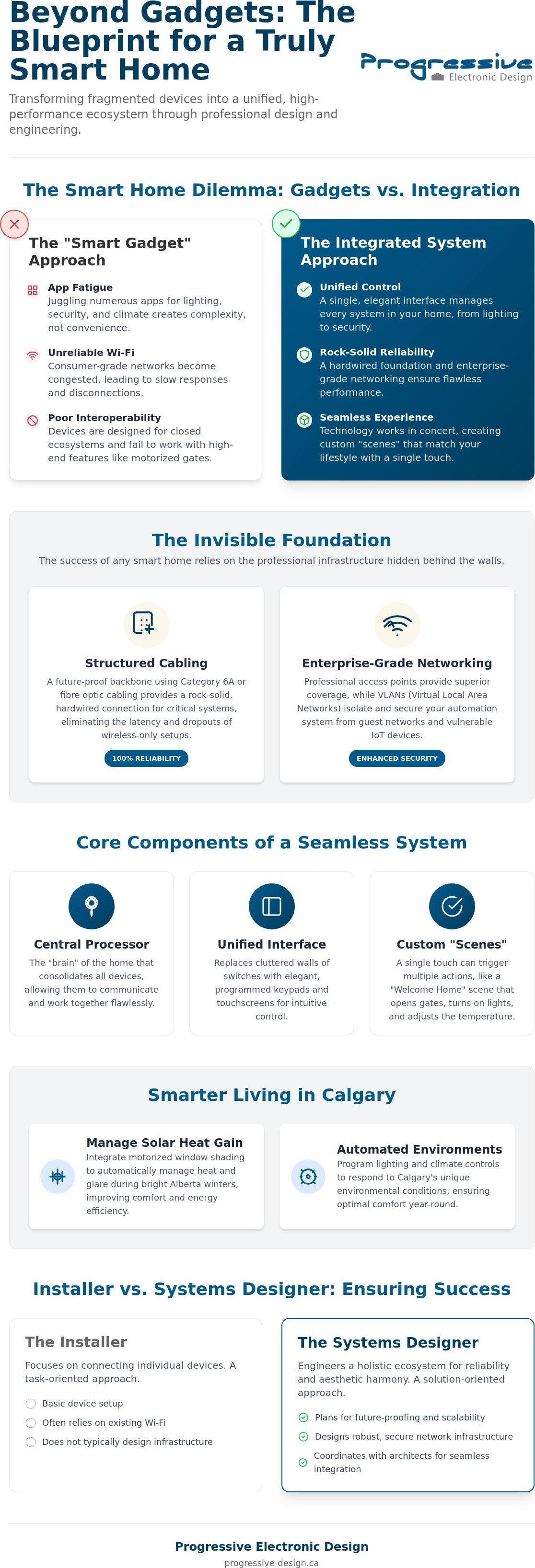
When you rely on a device-first approach, you inevitably encounter "app fatigue." This occurs when you find yourself managing fifteen different applications for lighting, security, climate, and audio. It's a fragmented experience that adds complexity rather than removing it. In contrast, smart home system upgrades focused on integration prioritize a system-first mindset. This approach ensures that every component of your Calgary estate works in concert, managed through a single, sophisticated interface that feels natural to use.
The Limitations of Consumer-Grade Hardware
Relying on off-the-shelf consumer gadgets often leads to technical bottlenecks. Most of these devices communicate via Wi-Fi, which can quickly lead to network congestion. As you add more sensors and controllers, your home internet may struggle to keep up, resulting in frequent disconnections and slow response times. Security is another significant concern. Unmanaged IoT devices are often susceptible to vulnerabilities that a professionally designed and firewalled system avoids. Consumer brands are also notorious for a lack of interoperability; they're designed to keep you within their own limited ecosystem rather than working with high-end features like motorized gates or custom video walls.
The Benefits of a Unified Control Platform
A unified platform provides a level of reliability and aesthetic harmony that DIY solutions can't match. Instead of a wall cluttered with different switches and dimmers, you can utilize elegant, programmed keypads that control entire rooms. This allows for the creation of custom "scenes" where a single touch adjusts multiple systems simultaneously. For example, a "Welcome Home" scene could open your motorized gates, activate the hallway lighting, and set your preferred temperature. For those investing in bespoke home automation systems, these smart home system upgrades ensure that technology remains a quiet, helpful presence rather than a source of frustration.
The Invisible Foundation: Infrastructure and Pre-Wiring
While sleek touchscreens and voice-controlled interfaces capture the imagination, the true success of any high-end integration project relies on the infrastructure hidden behind your drywall. For Calgary estates, a robust physical backbone is non-negotiable. While consumer-grade mesh systems are often marketed as a catch-all solution, they frequently lack the stability required for high-bandwidth applications like 4K video distribution or large-scale video walls. A professional approach prioritizes structured cabling, ensuring that the most critical components of your home remain hardwired for 100% reliability.
Future-proofing your residence for the standards of 2030 and beyond involves more than just buying the latest devices. It requires a strategic layout of Category 6A or fibre optic cabling that can handle the data demands of tomorrow. These smart home system upgrades provide a rock-solid foundation that wireless-only setups simply cannot match. By balancing the convenience of mobile control with a wired backbone, you eliminate the latency and dropouts that plague unmanaged systems. This architectural approach ensures your home remains as functional as it is beautiful, regardless of how technology evolves.
Professional Networking and Enterprise-Grade Wi-Fi
Standard ISP routers are designed for basic connectivity and typically fail to provide adequate coverage in homes exceeding 2,500 square feet. In modern Calgary custom builds, dense construction materials and complex layouts can create significant signal interference. To solve this, we implement enterprise-grade access points and Virtual Local Area Networks (VLANs). VLANs are essential for security; they isolate your automation system from guest Wi-Fi and unmanaged IoT devices, ensuring your private data remains protected from external vulnerabilities.
System Design and Consultation for New Builds
The ideal time to involve an integration expert is during the early architectural stages. Proper planning allows for the designation of a "head-end" location, a centralized area where equipment racks are housed out of sight. This centralized approach also allows for sophisticated lighting control, which removes the need for banks of switches in every room, effectively reducing wall clutter. If you're planning a renovation or new construction, early system design and consultation ensures your technology is integrated seamlessly into the home's aesthetic, rather than added as an afterthought.
Core Components of a Seamlessly Integrated Home
A truly integrated estate functions as a single, cohesive unit rather than a collection of independent subsystems. While the infrastructure provides the necessary power and connectivity, the core components define your daily experience within the home. High-end smart home system upgrades focus on how these elements interact to enhance comfort, convenience, and efficiency. For instance, your lighting shouldn't just turn on; it should respond to the time of day, the amount of natural light entering through the windows, and even the status of your security system.
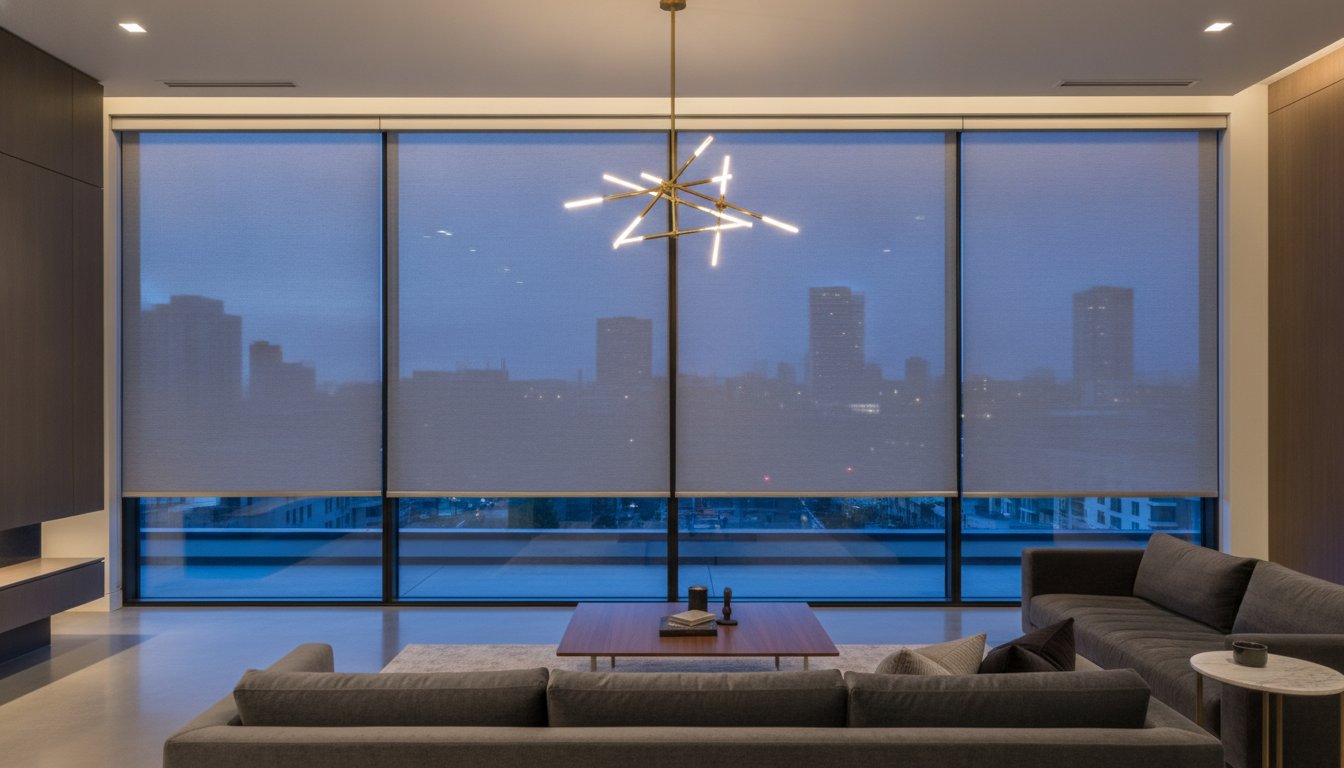
Lighting control moves beyond simple "on" and "off" functions to incorporate architectural scenes. With a single button press, you can transition a room from a bright workspace to an intimate dinner setting. Similarly, climate integration is essential for managing Calgary’s dramatic temperature swings. By utilizing remote sensors and smart thermostats, the system can balance heat distribution across multiple zones, ensuring every room remains comfortable regardless of whether a Chinook is blowing in or a cold snap has arrived. Motorized shading plays a dual role here; it protects expensive interior finishes from UV damage and assists in climate regulation by managing solar heat gain during our bright Alberta winters.
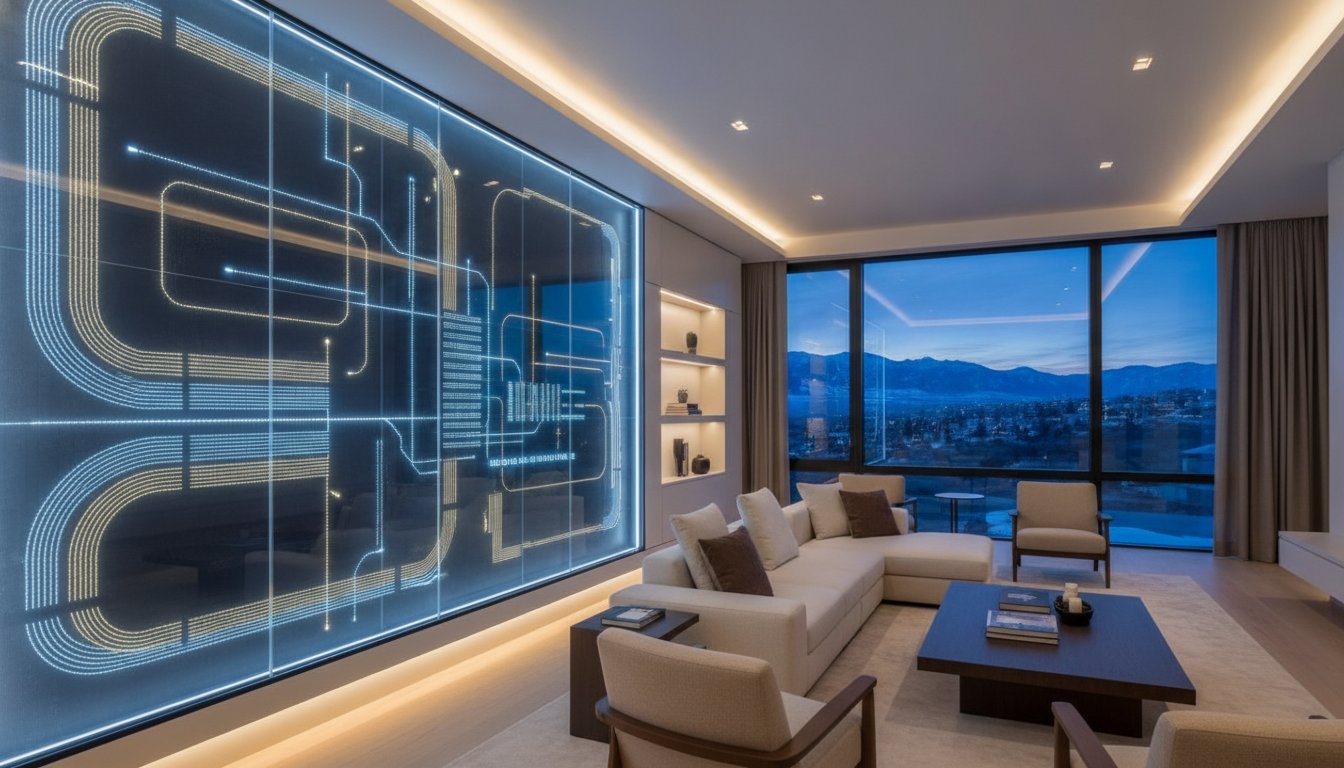
The experience is further elevated through professional audio and video systems. Distributed audio allows for high-fidelity sound to follow you from the kitchen to the patio without the need for visible wires or bulky speakers. For the ultimate entertainment experience, large-scale video walls can be integrated into the home's architecture, providing a cinematic experience that is managed through the same interface as your lights and shades.
Integrating Security and Access Control
Security in a luxury estate requires a more sophisticated approach than a basic alarm panel. We specialize in the integration of motorized gates and garage entries, allowing for seamless access for residents while maintaining a secure perimeter. When these systems are unified, your home can react to specific events. For example, if a perimeter sensor is triggered at night, the system can automatically ramp up exterior lighting and display the relevant camera feed on every touchscreen in the house. This level of coordination ensures that security is proactive rather than reactive.
The User Experience: Touchscreens, Remotes, and Voice
The most advanced technology is useless if it's difficult to operate. Designing intuitive interfaces is a hallmark of professional integration. While mobile devices are convenient for remote checks, dedicated touch panels and ergonomically designed remotes provide the most reliable control within the home. These interfaces are customized so that even guests can operate the guest suite or media room without a manual. To understand the full scope of these interfaces, you can explore our guide on smart home control systems. By prioritizing the user experience, these smart home system upgrades ensure that your technology serves you, rather than the other way around.
Calgary-Specific Considerations for Technology Design
Calgary’s environment presents unique challenges that off-the-shelf technology rarely accounts for. With over 330 sunny days per year, our city experiences significant solar heat gain, even in the middle of February. While previous sections highlighted the general benefits of automation, smart home system upgrades in Alberta must be specifically engineered to respond to these local conditions. Integrating motorized shading with your climate control system allows your home to automatically lower blinds when the sun is at its peak, preventing your interior from overheating while the furnace is simultaneously running in cooler parts of the house.
Our short but intense summers also dictate a specific approach to outdoor entertainment. High-performance outdoor audio and weather-rated video walls must be integrated into the primary home ecosystem to ensure they are easy to use during the few months of patio weather we enjoy. Reliability is equally critical for exterior access points. Motorized gates and security sensors must be rated for extreme cold and heavy snowfall to ensure they don't seize or trigger false alarms when temperatures drop to -30°C. Local support is vital here; having a partner who understands the nuances of the Calgary climate ensures your systems are maintained for year-round performance.
Energy Efficiency and the Alberta Climate
In a province where heating costs are a significant consideration, automation serves as a powerful tool for efficiency. During deep-freeze months, your system can be programmed to close all motorized window treatments at sunset, adding an essential layer of thermal insulation that keeps heat indoors. Smart home dashboards provide real-time data on your energy consumption, allowing you to identify which zones or systems are drawing the most power. These proactive smart home system upgrades help you manage your estate's environmental footprint without sacrificing comfort. If you are ready to optimize your home's performance, our team provides expert professional system design tailored to the Calgary landscape.
Protecting High-End Electronics from Power Fluctuations
The sophisticated processors and amplifiers found in custom home systems are highly sensitive to the electrical noise and voltage spikes common during Calgary’s summer storms. Power conditioning is the process of smoothing out voltage fluctuations and removing electrical noise from a power source to provide a clean, consistent stream of electricity to sensitive electronic components. Beyond simple surge protection, we implement enterprise-grade power management and battery backups. These systems ensure that critical security and communication infrastructure remains operational during a power outage, protecting your investment from long-term hardware degradation caused by unstable electricity.
Selecting a Partner for Professional Integration
The success of a luxury automation project depends less on the brand of hardware you choose and more on the expertise of the firm that designs it. There is a profound difference between a standard installer and a systems designer. An installer focuses on individual tasks, such as mounting a display or connecting a speaker. In contrast, a systems designer approaches your Calgary estate as a complex engineering project. When you are investing in significant smart home system upgrades, you require a partner who understands how to coordinate disparate technologies into a single, reliable ecosystem that feels like a natural part of your home's architecture.
When evaluating a potential partner, look beyond the surface-level photos of touchscreens. Examine their portfolio for evidence of technical complexity and aesthetic harmony. A professionally engineered system should be virtually invisible, with equipment neatly housed in centralized racks and wiring documented with meticulous precision. Progressive Electronic Design operates with a consultant-first philosophy. We prioritize the design phase to ensure that every component is accounted for before a single wire is pulled. This disciplined approach ensures that your system is not only functional but also easy to maintain and upgrade as new technologies emerge.
The Design-Build Process for Smart Homes
Our methodical process ensures that nothing is left to chance. We follow a structured journey to translate your vision into a high-performance reality:
- Phase 1: Discovery and Needs Assessment – We begin by understanding your lifestyle, identifying how you use each room, and determining which features will provide the most value to your family.
- Phase 2: Engineering and Schematics – Our team creates detailed wiring schematics and system layouts. This documentation serves as the blueprint for your home's technology infrastructure, ensuring every connection is planned for maximum reliability.
- Phase 3: Installation and Programming – Once the foundation is in place, we execute the physical installation and custom programming. This phase concludes with a refined interface tailored to your specific preferences.
Ongoing Support and System Evolution
Technology is not static, and the long-term success of smart home system upgrades requires proactive care. We implement remote monitoring tools that allow us to identify and resolve many network issues before you even notice them. This level of service is essential for maintaining the uptime of critical systems like security and climate control. Furthermore, a well-documented system allows for future evolution without the need to tear out walls or start from scratch. Whether you are adding a new video wall or seeking a motorized window shading installation, a professionally designed backbone ensures your estate remains at the forefront of modern luxury for years to come.
Elevating Your Estate with Purposeful Integration
A truly intelligent home is more than the sum of its parts; it's a meticulously engineered environment that responds to your lifestyle. By prioritizing a system-first approach and investing in a robust wired foundation, you eliminate the friction of fragmented apps and unreliable connections. These smart home system upgrades don't just add modern convenience; they create a future-proof asset that enhances the long-term value of your property.
From managing solar heat gain during our bright winters to ensuring complex motorized gate and security integrations operate in the extreme cold, local expertise is the defining factor for success. We specialize in the technical complexity required for Calgary’s luxury estates, including custom high-end audio/video and large-scale video walls. If you are ready to transform your living space into a unified, high-performance ecosystem, we invite you to book a professional system design consultation with Progressive Electronic Design. Your home should be a sanctuary of order and efficiency; let's ensure it stays that way.
Frequently Asked Questions
What is the difference between a smart home and smart home technology integration?
Smart home technology integration is the process of unifying separate systems into a single, cohesive ecosystem managed by a central brain. A basic smart home often consists of independent gadgets that don't communicate with one another, leading to app fatigue. True integration ensures your lighting, climate, and security work in concert, allowing you to control the entire estate through one elegant interface.
Can I integrate my existing smart devices into a professional system?
Many consumer-grade devices can be incorporated into a professional platform, provided they use compatible communication standards. However, for maximum reliability, we often recommend replacing Wi-Fi-dependent gadgets with hardwired professional alternatives during your smart home system upgrades. This transition stabilizes your network and ensures your devices respond instantly every time you use them.
Is it better to use wired or wireless connections for a smart home in Calgary?
Wired connections are the gold standard for critical infrastructure and high-bandwidth systems like video walls or security cameras. While wireless is convenient for mobile devices, the construction materials used in many Calgary luxury builds can cause significant signal interference. A hardwired backbone provides the rock-solid reliability and security that wireless-only setups simply can't match.
How much does professional smart home technology integration cost?
The investment for professional integration depends entirely on the scale of your property and the specific features you choose to include. Factors such as the number of controlled lighting zones, the complexity of motorized gate integration, and the quality of your audio/video systems all play a role. We focus on creating a custom design that provides long-term value and fits your specific lifestyle needs.
Do I need to rewire my entire house for a smart home system?
Full rewiring is often unnecessary, as we can implement hybrid solutions that utilize your home's existing electrical path. While new builds offer the best opportunity for comprehensive pre-wiring, many smart home system upgrades in existing residences use professional-grade wireless components for control. A system design consultation will help determine the most effective infrastructure plan for your specific renovation or estate.
Can a smart home system help with energy efficiency in the Calgary climate?
Integrated systems are highly effective at lowering energy costs by coordinating your climate control and motorized shading. In Calgary, your system can automatically close shades at sunset during the winter to add an extra layer of insulation. It can also manage solar heat gain on our many sunny days, reducing the strain on your cooling and heating systems throughout the year.
What happens to my integrated system if the internet goes down?
A professionally designed system continues to function locally even if your internet connection is interrupted. Because the system's "brain" lives inside your home rather than in the cloud, your wall keypads, automated schedules, and motorized gates will still work perfectly. You only lose remote access through your mobile device until the connection is restored.
How long does a professional smart home installation typically take?
The timeline for installation varies from a few weeks for focused upgrades to several months for comprehensive estate integration. For new construction, our work is phased to match the builder's schedule, with wiring happening early and final programming occurring just before you move in. We provide a clear, methodical project timeline during the initial design and consultation phase.